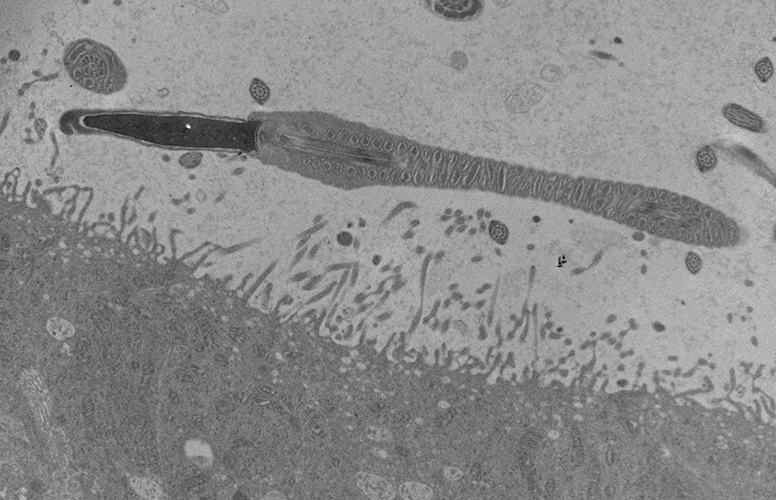
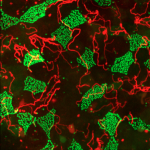
The epididymis plays important roles in the acquisition of sperm motility and fertilizing abilities. This organ is thus essential to the control of male fertility. Our laboratory is interested in the different intercellular communication systems that ensure proper sperm maturation in the epididymis. In particular, we study two signaling pathways important to the control of reproductive functions:
– one mediated by the small non-coding RNAs transported by the extracellular vesicles secreted in the epididymal fluid
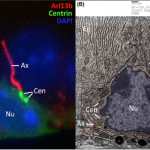
– another mediated by the primary cilia located on the surface of epididymal cells and acting as a biological antenna.
These studies are carried out using complementary techniques in imaging (confocal and electronic microscopy, fluidic imaging), molecular and cellular biology (PCR, Western blotting, organotypic air-liquid culture), on cell models, transgenic mice and human samples. All this work will enable us to identify the molecular and cellular factors important to sperm maturation and to ultimately develop new tools for the control of male fertilizing ability applicable to livestock and human health.